 By SGHRSDC Team
The monsoon season brings welcome relief from the summer heat, but it also creates conditions that allow bacteria, viruses, and mosquitoes to thrive. As a result, the number of people suffering from fever, infections, stomach problems, and mosquito-borne illnesses increases significantly. Ignoring early symptoms or delaying medical tests can make these conditions more serious and lead to complications.
Understanding common monsoon diseases and getting the right diagnostic tests at the right time is one of the best ways to protect your health. At Sri Guru Har Rai Sahib Diagnostic Centre, under the guidance of Dr. Amrit Pal Singh, patients receive accurate diagnostic services using advanced technology, helping doctors begin timely treatment with confidence.
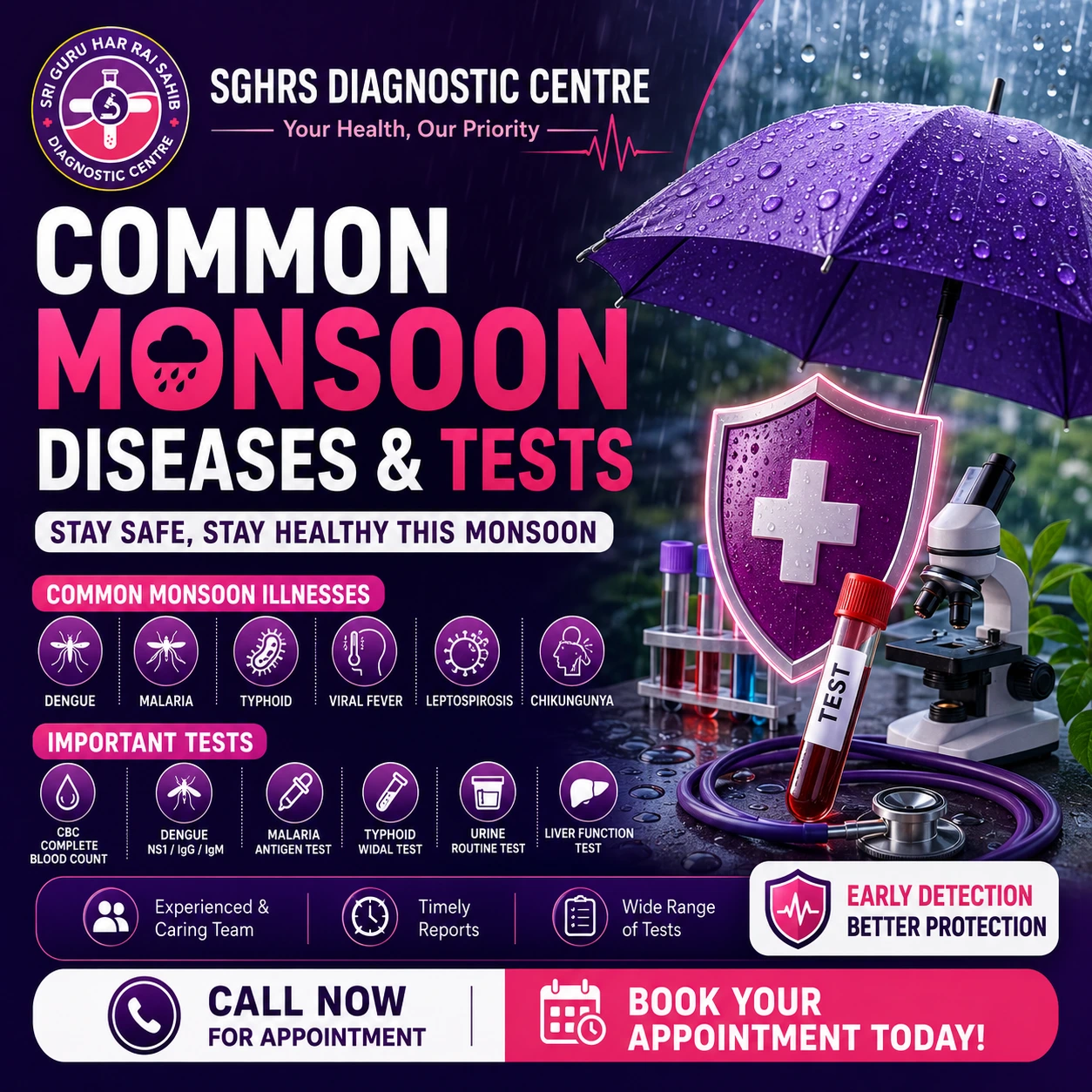
Several illnesses become more common during the rainy season due to contaminated food, water, and mosquito breeding.
1. Dengue
Dengue is one of the most common monsoon diseases spread by mosquito bites. Symptoms include:
● High fever
● Severe headache
● Joint and muscle pain
● Skin rash
● Low platelet count
If these symptoms appear, a dengue test should not be delayed.
2. Malaria
Malaria is another mosquito-borne infection that causes:
● Chills and shivering
● High fever
● Sweating
● Fatigue
A malaria blood test helps diagnose the infection early and supports timely treatment.
3. Typhoid
Typhoid is caused by consuming contaminated food or water. Common symptoms include:
● Persistent fever
● Weakness
● Abdominal pain
● Loss of appetite
A typhoid test can help confirm the infection before complications develop.
4. Viral Fever
Many viral infections during monsoon begin with symptoms similar to the flu. If fever continues for more than two days, your doctor may recommend a CBC blood test and other investigations to identify the cause.
Many people rely on home remedies or self-medication, assuming the illness will improve on its own. However, several common monsoon diseases have similar symptoms, making it difficult to identify the exact cause without proper testing.
Early diagnosis helps:
● Detect infections quickly
● Prevent disease progression
● Reduce the risk of complications
● Help doctors start the right treatment
● Support faster recovery
Timely testing also helps avoid unnecessary medications by confirming the exact condition.
Depending on your symptoms, your doctor may recommend:
● Dengue Test – Detects dengue infection.
● Malaria Blood Test – Confirms malaria parasites.
● Typhoid Test – Helps diagnose typhoid fever.
● CBC Blood Test – Evaluates infection and platelet count.
● Preventive Health Checkup – Useful for monitoring overall health, especially for senior citizens and people with existing medical conditions.
Choosing a trusted diagnostic centre in Mohali ensures reliable reports that support accurate medical decisions.
When it comes to your health, accurate reports and timely diagnosis make all the difference. Sri Guru Har Rai Sahib Diagnostic Centre is committed to providing dependable diagnostic services with a patient-first approach.
What makes SGHRSDC different?
● Advanced diagnostic technology
● Experienced medical professionals
● Guidance from Dr. Amrit Pal Singh
● Accurate and timely reports
● Comprehensive pathology and diagnostic services
● Hygienic and patient-friendly environment
● Trusted diagnostic centre in Mohali
Along with fever-related investigations, the centre also offers preventive health checkups, blood tests, imaging services, and routine diagnostic screenings, making it a convenient destination for complete healthcare diagnostics. Explore all diagnostic services available at the centre.
While testing is important, prevention is equally essential. Follow these simple precautions:
● Drink clean, filtered water.
● Avoid uncovered street food.
● Prevent mosquito breeding around your home.
● Use mosquito repellents and full-sleeved clothing.
● Wash fruits and vegetables thoroughly.
● Consult a doctor if fever persists beyond 48 hours.
Small preventive measures can significantly reduce your risk of developing common monsoon diseases.
The rainy season increases the risk of infections, but early awareness and timely diagnosis can make a significant difference. Recognizing the symptoms of common monsoon diseases and getting the recommended tests without delay helps ensure quicker treatment and better health outcomes.
If you or a family member experiences persistent fever or other monsoon-related symptoms, visit Sri Guru Har Rai Sahib Diagnostic Centre. Under the expert guidance of Dr. Amrit Pal Singh, the centre offers accurate diagnostic services, advanced testing facilities, and comprehensive preventive health checkups.
Book your diagnostic test today and take the first step toward protecting your health this monsoon at Sri Guru Har Rai Sahib Diagnostic Centre .
1. Which diseases are most common during the monsoon?
Dengue, malaria, typhoid, viral fever, and water-borne infections are among the most common monsoon diseases.
2. When should I get tested for monsoon-related fever?
If your fever lasts more than 48 hours or is accompanied by chills, severe body pain, rash, or weakness, consult a doctor and get the recommended tests.
3. Which tests are commonly recommended during the monsoon?
Doctors may advise a dengue test, malaria blood test, typhoid test, CBC blood test, or other investigations based on your symptoms.
4. Why is a CBC blood test important during fever?
A CBC blood test helps evaluate infection, white blood cell levels, and platelet count, supporting accurate diagnosis.
5. Where can I get reliable diagnostic tests in Mohali?
Sri Guru Har Rai Sahib Diagnostic Centre offers advanced diagnostic services, timely reports, preventive health checkups, and expert support under Dr. Amrit Pal Singh.